Clearing a lot in East Tennessee is a very different job than dropping a single tree. You're dealing with thick understory brush, brambles and vines, small junk trees tangled among the good ones, roots, old stumps, and years of accumulated growth. Done in the wrong order, you get a rutted, eroding mess instead of a usable property. Lot and land clearing in Knoxville works best when the crew understands not just how to cut, but how Knox County's sloped, clay-heavy ground behaves once you open it up. Our licensed, fully insured local crews clear building sites, fence lines, and overgrown tracts, manage the debris, and leave you with ground you can actually build on, fence, or enjoy.
What Do People Use Lot Clearing For?
"Lot clearing" covers a wide range of jobs. Most calls we get in Knox County fall into one of these use cases:
- Clearing a building site for a new home, garage, shop, barn, or in-ground pool — opening a footprint (plus driveway and setbacks) so a builder can grade and pour.
- Clearing a fence line or property boundary — a clean strip for cattle, horse, privacy, or field fencing, or re-establishing where the line actually runs.
- Reclaiming an overgrown or neglected property — a lot or field that's sat unmowed for years and grown up in cedar, locust, privet, and brush.
- View or pasture clearing — opening a sight line to a ridge or valley, or turning grown-up scrub back into usable pasture.
- Creating defensible space or a firebreak — thinning brush and small trees back from a structure to reduce fuel and give you a buffer.
Whatever the goal, the first step is the same: we walk the property, talk through what you want the finished ground to look like, and put the scope in writing. If the job is really just a few large trees, our tree removal service may be the simpler answer.
Selective Clearing vs. Full Clearing: Which Do You Need?
The biggest decision on any clearing job is how much stays and how much goes. Selective clearing keeps the trees worth keeping — mature shade and boundary trees — while removing the junk trees, brush, brambles, vines, and undergrowth. It's the common choice on residential lots where you want to reclaim the ground without stripping it bare, and it takes more hand work because the crew cuts around the keepers.
Full clearing takes everything down to open ground — every tree, the brush, and often the stumps and roots too — so the lot is ready for grading and construction. That's what most builders need for a house pad, a shop slab, or a pool excavation. Plenty of Knoxville jobs blend the two: full clearing where the structure and driveway go, and selective clearing around the edges for a screen of trees. If trees you want to keep look questionable, a round of tree trimming and pruning or a check through our plant health care service can confirm they're worth keeping first.
Handling the Underbrush, Brambles, and Small Trees
Homeowners focus on the big trees, but on a neglected lot it's the understory that eats the most time — waist-high brambles, greenbrier and honeysuckle vines, privet thickets, and a carpet of saplings. A good job takes the whole vertical profile: big trees, mid-story junk trees, and ground-level brush all go, leaving clean, walkable ground. Where stumps sit in the way of building or fencing, our stump grinding service takes them below grade so the line or pad is clear.
What Equipment and Crew Does It Take?
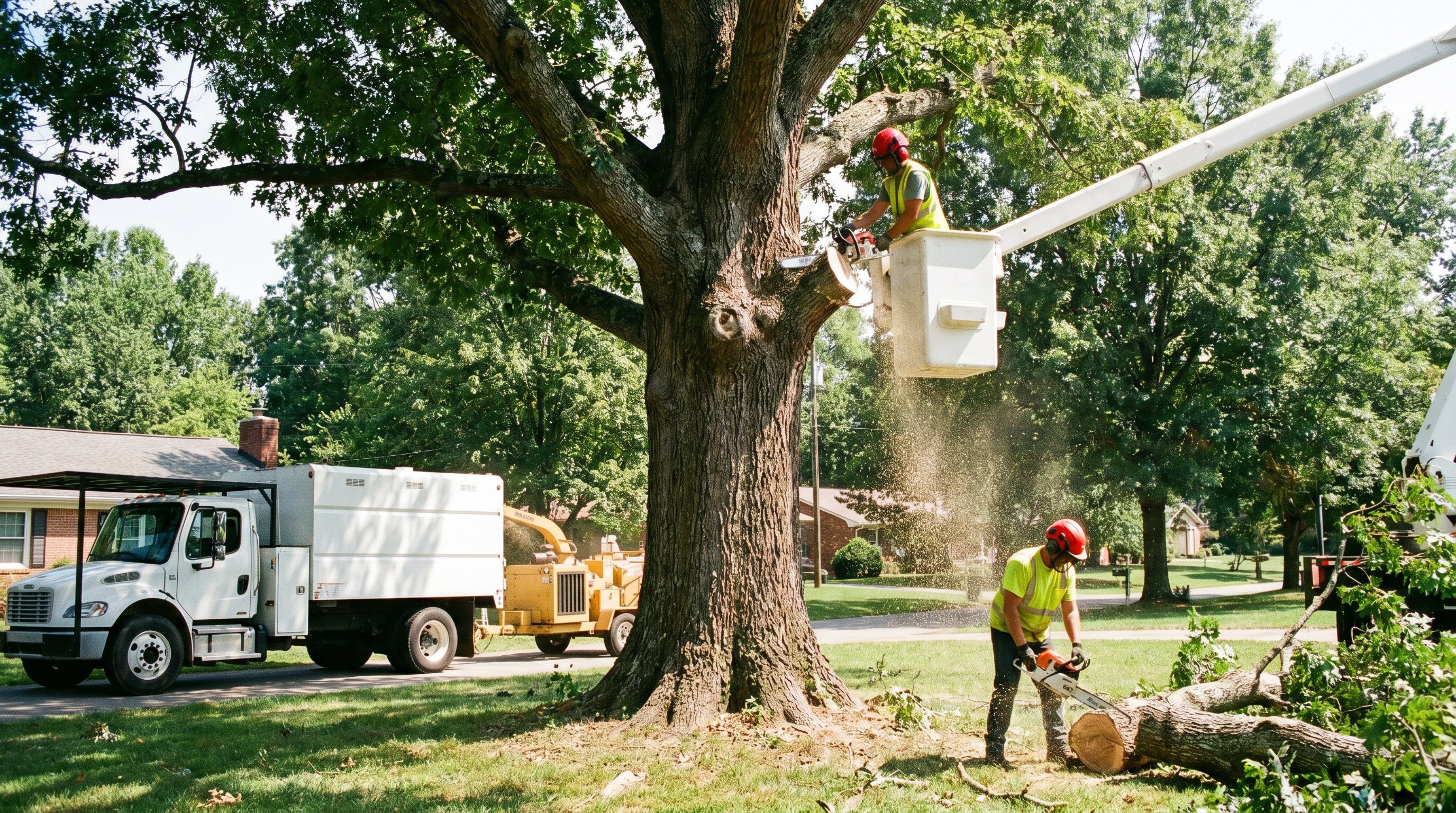
The mix depends on scope, but a typical Knox County job draws on chippers to turn brush and small trees into mulch on the spot, climbing and ground crews with chainsaws for selective drops and tight spots, and dump trailers and trucks for material that leaves the site. For very large trees that must be lifted out rather than dropped, a crane may come into play — see our crane tree removal service. On bigger commercial sites, clearing is often one piece of a broader scope handled through our commercial tree services.
What Happens to All the Debris?
A cleared lot generates a surprising volume of material, and what you do with it is one of the biggest cost levers on the job. You generally have three paths:
- Chip and mulch on-site. Brush and smaller wood are ground into mulch that stays put as natural ground cover — the most economical option, welcome on rural lots.
- Haul off-site. Everything is trucked to a disposal yard for the cleanest result. Most residential and urban jobs need this; it costs more for truck time and dump fees.
- On-site per local rules. In some rural settings brush can be piled and, where the rules allow, burned — but burning is regulated and seasonal.
We'll lay out which options fit your property in the written estimate.
Grade, Drainage, and Erosion on East Tennessee Lots
This is the part cheap outfits skip. Knox County ground is largely sloped and heavy in clay, and roots do a lot of quiet work holding it together and soaking up water. Strip a hillside bare and the next hard rain can carve gullies, wash soil into the road, and leave you with a drainage problem you didn't have before — our blog on tree roots and foundation damage in Knoxville covers how local soils behave around roots. We clear with grade and water in mind, staging the work so bare soil isn't exposed too long and flagging where you may want silt fencing, seeding, or a drainage fix. On a sloped lot, how you clear matters as much as what you clear.
Get a Free Written Lot Clearing Estimate
Licensed & insured local crews, complete cleanup, and a clear disposal plan. We put the scope and price in writing before any work starts.
Call (865) 348-3063What Drives the Cost of Lot Clearing?
Lot clearing is almost impossible to quote sight-unseen — the price swings enormously with the property. Rather than a fixed number, think in terms of the factors that move it:
| Cost factor | What pushes the price up |
|---|---|
| Acreage / area cleared | More ground means more hours, more equipment, and more debris to handle. |
| Tree & brush density | A thick, tangled tract takes far longer than scattered trees over open ground. |
| Tree size mix | Large hardwoods and heavy stumps cost more to take down and remove than small growth. |
| Terrain & slope | Steep, rocky, or wet ground slows equipment and adds erosion-control care. |
| Access | Tight entries and long drags to a staging area add time; open access saves it. |
| Disposal & haul distance | Mulching on-site is cheapest; hauling off-site adds truck time and dump fees. |
| Selective vs. full clearing | Selective work around keepers is slower per acre; full clearing is more total volume. |
Because those factors combine so differently, every job gets its own free written estimate rather than a menu price. If part of your project is straightforward tree removal, our Knoxville tree removal cost guide shows what individual trees run.
How the Clearing Process Works, Step by Step
- Free on-site walk-through. We identify the keepers, the hazards, the slope and drainage, and the access.
- Written estimate and plan. A written scope: what's cleared, what stays, how debris is handled, and the price — with permit or erosion notes flagged.
- Clearing the material. Brush, small trees, and vines are cut and chipped; larger trees are dropped or dismantled and bucked, with the crew working carefully around any keepers.
- Stumps and grade. Where the plan calls for it, stumps are ground below grade and the ground is tidied so it's ready for building, fencing, or seeding.
- Debris handling and cleanup. Material is mulched in place, hauled off, or managed per your plan, and the site is left clean.
Do You Need a Permit to Clear Land in Knox County?
Rules vary with the size and location of the job, so it's worth checking before any major clearing. Small clearing on your own residential property often doesn't require a special permit, but larger jobs, work near regulated streams, wetlands, or drainage easements, and any burning of debris can trigger erosion-control, stormwater, or burn-permit requirements. We won't assert what any specific ordinance says on your parcel — confirm the local rules up front. Our blog on tree removal permits in Knoxville is a useful starting point, and we'll help you figure out what applies.
Frequently Asked Questions
How much does lot clearing cost in Knoxville?
It's priced per job, because no two properties are alike. The main drivers are acreage, tree and brush density, terrain and slope, and haul distance. A light selective job on a small, flat lot sits at the low end; a dense, steep tract with full removal and off-site hauling costs more. You get a free written estimate after we walk it.
What's the difference between selective and full clearing?
Selective clearing keeps the trees worth keeping — mature shade and boundary trees — while pulling junk trees, brush, and vines. Full clearing takes everything down to open ground for grading and building. Many jobs blend the two: full clearing on the footprint, selective around the edges for privacy.
Do I need a permit to clear land in Knox County?
Small residential clearing often doesn't need a special permit, but rules vary. Larger jobs, work near streams, wetlands, or easements, and any burning can trigger erosion-control, stormwater, or burn-permit requirements. Check the local rules first — see our permit guide, and we'll help you sort out what applies.
What happens to the brush and trees you clear?
Three common paths: chip and mulch on-site (most economical), haul off-site (cleanest finish, needed for most residential jobs), or pile and burn where local rules allow it. We match the method to your property, the rules, and your budget.
Can you clear a steep or sloped lot?
Yes. Sloped, clay-heavy ground is common in East Tennessee. Removing trees and roots on a grade changes how water moves, so we plan with drainage and erosion in mind. Steep or tight-access sites take more time and equipment, reflected in the estimate.
How soon can you start?
After we walk the property and you approve the estimate, most jobs are scheduled within a few weeks, depending on scope, weather, and any permits. Small selective jobs move faster; large or permitted tracts take longer. Have a builder's timeline? Tell us and we'll work to fit it.
Schedule Your Knoxville Lot Clearing
Call (865) 348-3063 or use the form for a free written estimate. Whether it's a quarter-acre backyard or a multi-acre building site, our local crews handle it, and larger commercial scopes run through our commercial tree services. We serve all of Knox County including West Knoxville, Farragut, North Knoxville, South Knoxville, Maryville, and Oak Ridge. Storm damage on the lot? Our emergency tree service runs 24/7.