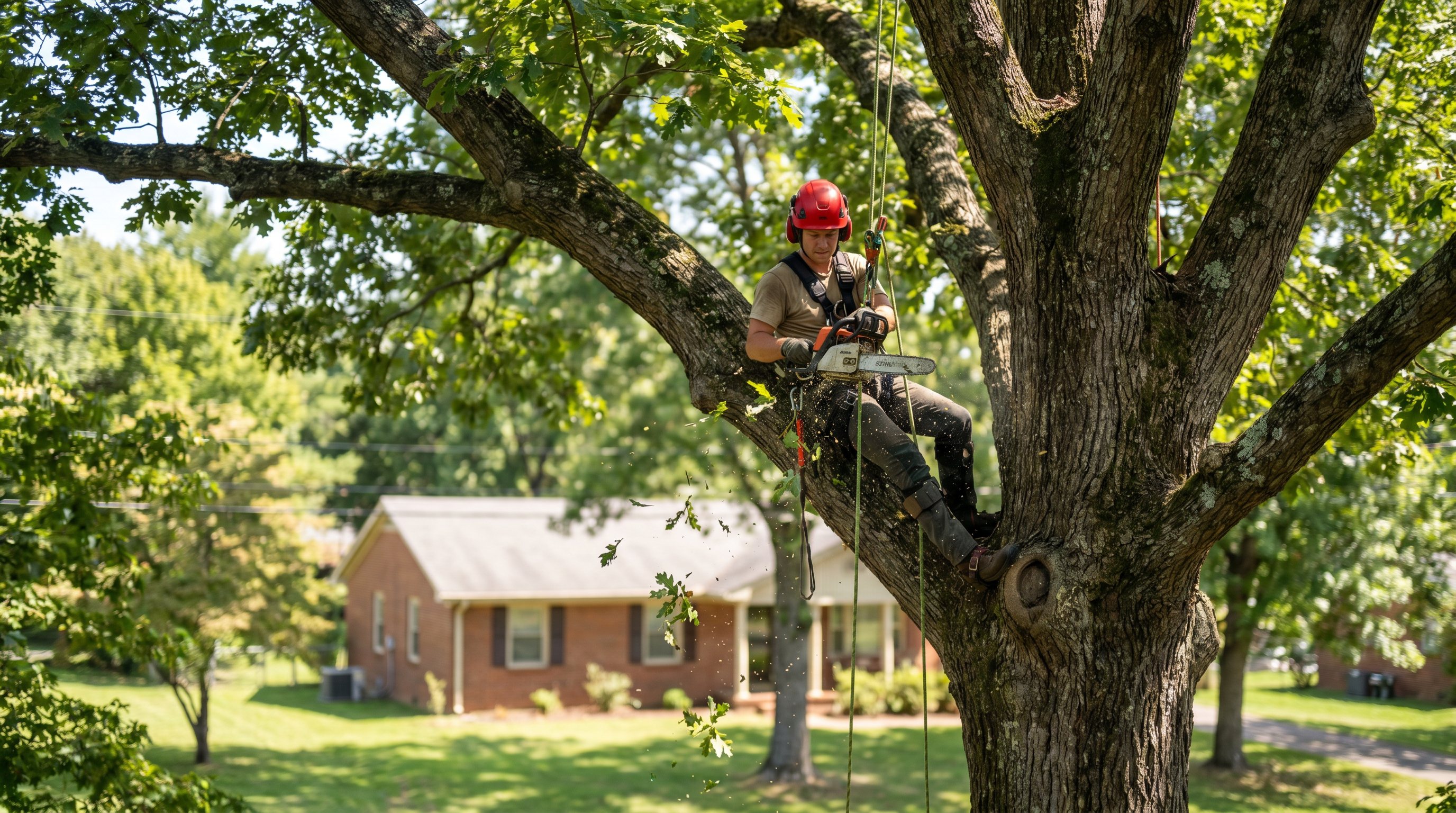
If you own a home in Knoxville, you have trees — and those trees need care. East Tennessee's rich soil and long growing season produce some of the finest hardwoods in the country: White Oak, Tulip Poplar, Red Maple, Hickory, and Shortleaf Pine. But an unmaintained tree becomes a liability the moment a spring thunderstorm or a winter ice event rolls through the Tennessee Valley. Professional tree trimming and pruning in Knoxville, TN isn't a luxury — it's preventive maintenance that protects your home, your power lines, and the long-term health and beauty of your trees. Done correctly, pruning is one of the highest-value things you can do for a mature tree.
Is There a Difference Between Trimming and Pruning?
People use the words interchangeably, and in everyday conversation they mean the same thing: selectively removing specific branches to improve a tree's structure, health, and safety. If arborists draw any line at all, it's this — "pruning" usually describes the health- and structure-driven cuts made to formal standards, while "trimming" is the word most homeowners reach for when they mean shaping a tree or getting limbs off the roof. What actually matters isn't the label. It's which branches come off, where the cut is made, and whether the person doing it understands how a tree responds. A bad cut in the wrong place invites decay for decades; a good cut heals over and the tree is better for it.
All of our pruning follows the ANSI A300 standard — the same industry benchmark certified arborists across Tennessee work to. That standard exists precisely because trees don't heal like people do. They can't repair a wound; they can only seal it off and grow around it. So every cut has to be made with that permanence in mind.
The Main Types of Pruning, Explained Plainly
Under ANSI A300, professional pruning is grouped into a handful of clearly defined objectives. Knowing them helps you understand exactly what you're paying for on the estimate:
- Crown cleaning — the most common request. We remove the dead, dying, diseased, and broken limbs from the canopy, plus rubbing or crossing branches. This is the single best value for storm safety, because dead limbs are the first things to come down in wind.
- Crown thinning — selectively removing live branches to open up the canopy so wind and light pass through more easily. A thinned tree catches less "sail" in a storm and lets sunlight and airflow reach the interior, which discourages disease. Done right, it's subtle; done wrong (over-thinning, or "lion-tailing") it weakens the tree.
- Crown raising — removing the lowest branches to create clearance over a driveway, sidewalk, roofline, or lawn. This is how you stop limbs from scraping the house or blocking the view without harming the tree.
- Crown reduction — carefully shortening the overall height or spread by cutting back to sound lateral branches that can take over as the new leaders. This is the correct way to make a tree smaller. It is slow, precise work — and it is nothing like topping.
Why You Should Never Top a Hardwood
Topping is the practice of hacking a tree's main limbs back to blunt stubs, with no regard for where the cut lands. It's cheap, it's fast, and it is one of the worst things anyone can do to a hardwood. Here's why we refuse to do it:
- It starves the tree. Leaves are how a tree makes food. Strip them all at once and you force the tree to burn through stored energy just to survive.
- It invites decay. Those big, flat stub cuts almost never seal over. They become open doorways for rot and fungus that can hollow the trunk over the following years.
- The regrowth is dangerous. A topped tree panics and throws up dozens of fast, weakly attached shoots called water sprouts. They grow back taller than before, but they're only loosely anchored to the outer wood — so the "fixed" tree is now more likely to shed limbs in the next storm, not less.
- It's permanent and ugly. A topped tree never regains its natural form, and it will need repeat cutting forever.
If a tree genuinely is too big for its space, the answer is a proper crown reduction — or, when the tree is structurally unsound, honest tree removal rather than a disfiguring shortcut. Where the concern is a specific weak union or a split leader rather than size, cabling and bracing can often support the tree instead of cutting it.
Why Knoxville Hardwoods Need Regular Pruning
Knoxville's climate is hard on trees. Spring brings severe thunderstorms with straight-line winds. Summer humidity feeds fungal diseases. And winter occasionally drops ice that can break a poorly structured tree in half. Our native species each have their own reasons for wanting routine care:
- White Oak — big, heavy, long-lived, and prone to holding deadwood high in the canopy. Regular crown cleaning removes that hazard, and dormant-season timing protects against oak wilt.
- Tulip Poplar — fast-growing with somewhat brittle wood, so it drops limbs readily in wind. Thinning reduces the sail area that gets these tall trees in trouble.
- Red Maple — often develops tight, V-shaped branch unions that split under ice load. Structural pruning while the tree is young prevents the failure later.
- Hickory — strong but tall, and self-prunes messily; proactive deadwood removal keeps heavy limbs from coming down on their own.
- Shortleaf Pine — benefits from clearance and deadwood removal, and good airflow helps limit pest and disease pressure.
A well-pruned tree resists wind, sheds ice better, and puts its energy into healthy growth instead of supporting dead weight. Good airflow and light through the canopy also cut down on the damp, stagnant conditions that fungal disease loves. For a fuller picture of caring for our regional species, see our complete guide to tree care in East Tennessee and the warning signs in how to tell if a tree is dying.
Get a Free Written Pruning Estimate
Licensed & insured, local Knox County crews, ANSI A300 pruning with no topping, and full chipping and cleanup. No pressure, no surprise pricing.
Call (865) 348-3063When Is the Best Time to Prune Trees in East Tennessee?
For most hardwoods in our area, the ideal pruning window is late winter through early spring, before bud break. The tree is dormant, its structure is fully visible without leaves in the way, and the fresh cuts seal cleanly once growth resumes. Pruning in dormancy also means you're not removing a bunch of leaves right when the tree wants to use them.
Oaks are a special case. They should be pruned in the dormant season specifically to avoid oak wilt — a serious disease spread by sap-feeding beetles that are drawn to fresh wounds during warm weather. Cutting an oak in late spring or summer opens a door those beetles can walk through. Our deep dive on timing is here: the best time to trim oak trees in Tennessee.
That said, we prune year-round when it matters. Dead limbs, storm-cracked branches, and anything hanging over your roof don't wait for the calendar, and neither do we. If a big storm is in the forecast, our Knoxville storm prep checklist covers what to look for; anything clearly hazardous is worth a look right away — see spotting a hazardous tree.
How Often Should Mature Trees Be Pruned?
As a general rule, mature shade trees in the Knoxville area do well with a professional pruning roughly every three to five years. Younger trees benefit from lighter, more frequent shaping to build strong structure early — that's the cheapest insurance you can buy against expensive problems down the road. And any tree, of any age, should be checked after a significant wind or ice event. The goal is regular, light maintenance rather than waiting a decade and then hacking out an alarming amount of wood in one go, which stresses the tree.
What to Expect From Our Knoxville Trimming Crew
When you call us for tree trimming, here's exactly how it goes:
- Free on-site estimate. We walk the property, assess each tree's health, structure, and surroundings, and quote the work in writing before anything begins — with a clear pruning objective (cleaning, thinning, raising, or reduction) spelled out.
- Scheduling. Most trimming jobs are scheduled within about a week.
- The work. Depending on access, our climbers or our bucket truck handle the pruning safely from above. Larger limbs are lowered on ropes and rigging so nothing free-falls onto your lawn, beds, or fence.
- Full cleanup. Branches go through the chipper, debris is hauled off, and your yard is left raked and clean.
Most residential trimming jobs in Knoxville take a half-day or less. Estate-sized properties or several large trees may run a full day. We won't run climbers or a bucket in high wind or lightning — safety first, always.
What Does Tree Trimming Cost in Knoxville?
Most residential pruning jobs run between $250 and $1,200, driven by tree size, the number of trees, how difficult the access is, and how much wood is being removed. These are typical ranges for planning — every job gets a firm written quote first.
| Job / situation | Typical 2026 Knoxville range |
|---|---|
| Small ornamental, under 25 ft (shaping / light prune) | $250 – $400 |
| Mid-size tree, crown raise or clearance pruning | $400 – $700 |
| Large hardwood, crown thinning (single tree) | $600 – $1,000 |
| Mature White Oak, crown clean + deadwood removal | $800 – $1,500 |
| Multiple large trees / estate property | Quoted on site |
| Storm-damaged limb removal | Varies — call for assessment |
These are typical ranges, not guarantees — the only way to know your number is a free on-site look. For how tree work is priced across the board in our market, see our Knoxville tree service cost guide.
Is This Pruning or Is It Shrub Work?
Tree pruning and shrub or hedge trimming are genuinely different jobs — different tools, different techniques, and different skills. Pruning a 60-foot oak on ropes has almost nothing in common with shearing a boxwood hedge. If your project is mostly boxwoods, hollies, privet, or ornamental hedges rather than trees, our shrub & hedge trimming service is the right fit. When a property needs both, we're glad to quote them together in one visit.
Beyond Pruning: Related Services
Trimming is often one piece of a bigger picture. If a tree is too far gone to save, we handle safe tree removal and, when a limb or whole tree has already failed, 24/7 emergency tree service. Leftover stumps are finished off with stump grinding. For trees showing stress or early disease, plant health care can turn things around, and larger properties being cleared are covered by lot & land clearing. Businesses and property managers can set up recurring care through our commercial tree services.
Frequently Asked Questions
What is the difference between tree trimming and pruning?
In everyday use they mean the same job — selectively removing branches to improve structure, health, and safety. Arborists lean on "pruning" for health- and structure-driven cuts made to ANSI A300 standards; homeowners often say "trimming" for shaping and clearance. What matters is which branches come off and where the cut is made.
How much does tree trimming cost in Knoxville?
Most jobs run $250–$1,200. A small ornamental is typically $250–$400, while a mature White Oak crown clean with deadwood removal often falls in the $800–$1,500 range. Size, tree count, access, and how much is removed are the main drivers, and every job starts with a free written estimate.
When is the best time to prune trees in East Tennessee?
Late winter to early spring, before bud break, for most hardwoods. Oaks especially should be pruned in dormancy to avoid oak wilt spread by warm-weather beetles. Dead and storm-damaged limbs are the exception — remove those any time. More in our oak pruning timing guide.
Why should you never top a tree?
Topping starves the tree of leaves, leaves big wounds that decay, and forces weak "water sprout" regrowth that fails more easily in storms. It makes a tree uglier, unhealthier, and more hazardous. Proper crown reduction cuts back to sound lateral branches instead — that's the right way to make a tree smaller.
How often should mature trees be pruned?
Roughly every three to five years for mature shade trees, more often for young trees you're shaping for good structure. Check any tree after a major wind or ice event. Regular light pruning is far healthier than removing a lot of wood at once.
Do you trim shrubs and hedges too?
Those are separate jobs with different tools and techniques, so we handle them under shrub & hedge trimming. If a property needs both tree pruning and hedge work, we can quote them together.
Schedule Your Knoxville Tree Trimming
Call (865) 348-3063 or use the form for a free written estimate. We serve all of Knox County including West Knoxville, Farragut, North Knoxville, South Knoxville, Maryville, and Oak Ridge.